Pietro Berti

Pietro Berti

VILLA BERTI - IMOLA VIA BEL POGGIO 13

PER ESPRIMERE IL VOSTRO PARERE

PER CHI VOLESSE ESPRIMERE IL PROPRIO PARERE SUGLI ARGOMENTI TRATTATI O VOLESSE RICHIEDERE IN MERITO AGLI STESSI DELUCIDAZIONI O CHIARIMENTI, E' POSSIBILE COMUNICARE CON ME INVIANDO UN COMMENTO (cliccando sulla scritta "commenti" è possibile inviare un commento anche in modo anonimo, selezionando l'apposito profilo che sarà pubblicato dopo l'approvazione) OPPURE TRAMITE MAIL (cliccando sulla bustina che compare accanto alla scritta "commenti")


FUSIORARI NEL MONDO

Majai Phoria


UN UOMO GIACE TRAFITTO DA UN RAGGIO DI SOLE, ED E’ SUBITO SERA

Non nobis Domine, non nobis, sed Nomini Tuo da gloriam

Non nobis Domine, non nobis, sed Nomini Tuo da gloriam

VIAGGIA CON RYANAIR

JE ME SOUVIENS

JE ME SOUVIENS

VILLA BERTI VIA BEL POGGIO N. 13 IMOLA http://www.villaberti.it/


Condizioni per l'utilizzo degli articoli pubblicati su questo blog

I contenuti degli articoli pubblicati in questo blog potranno essere utilizzati esclusivamente citando la fonte e il suo autore. In difetto, si contravverrà alle leggi sul diritto morale d’autore.
Si precisa che la citazione dovrà recare la dicitura "Pietro Berti, [titolo post] in http://pietrobertiimola.blogspot.com/"
E' poi richiesto - in ipotesi di utilizzo e/o citazione di tutto o parte del contenuto di uno e/o più post di questo blog - di voler comunicare all'autore Pietro Berti anche tramite e-mail o commento sul blog stesso l'utilizzo fatto del proprio articolo al fine di eventualmente impedirne l'utilizzo per l' ipotesi in cui l'autore non condividesse (e/o desiderasse impedire) l'uso fattone.
Auguro a voi tutti un buon viaggio nel mio blog.

Anchorage

Anchorage
Visualizzazione post con etichetta Spagna Squadre campioni di Spagna di calcio. Mostra tutti i post

martedì 26 aprile 2011

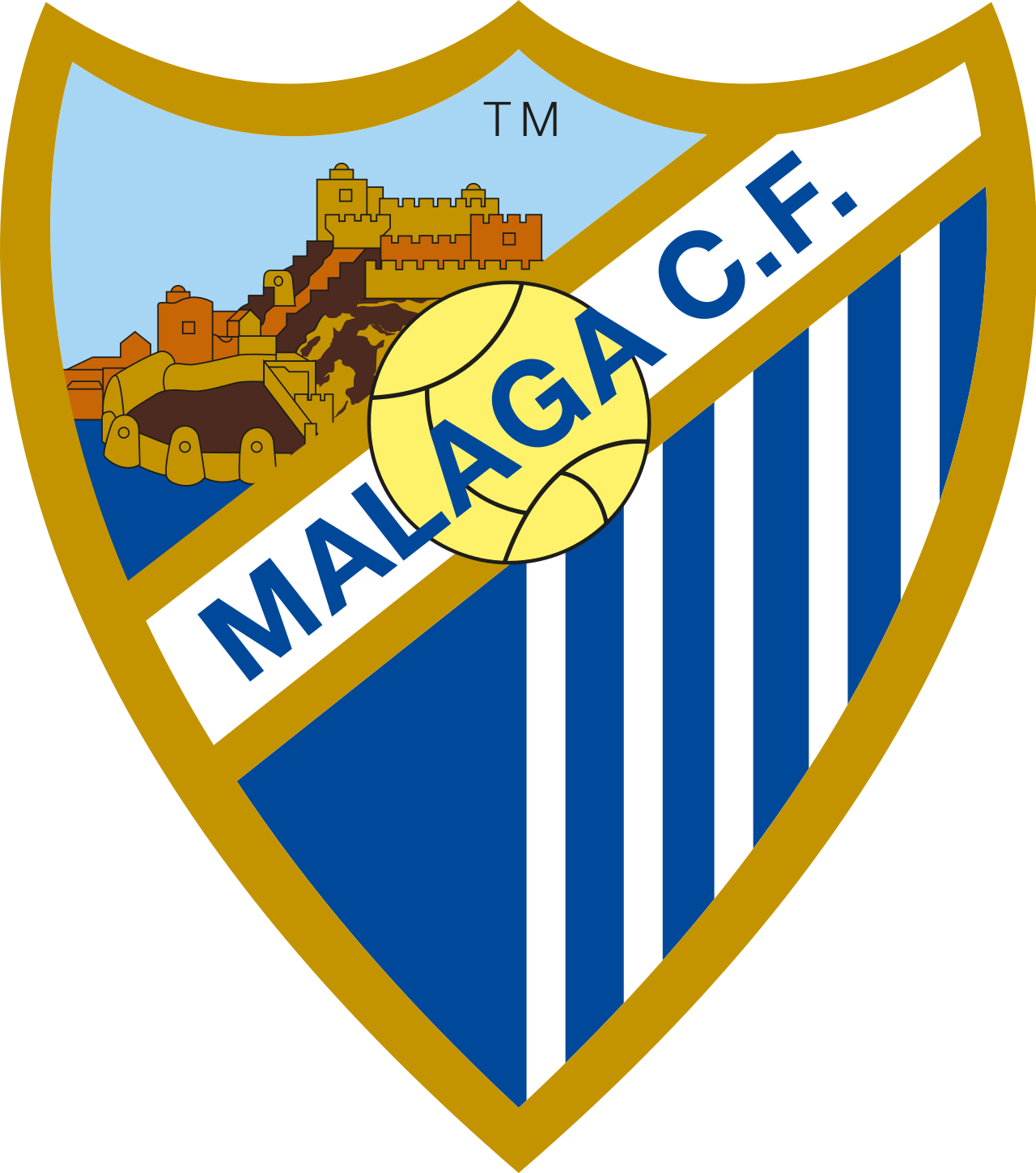
Málaga Club de Fútbol


Il Málaga Club de Fútbol è una società calcistica spagnola, che milita attualmente nella Liga, la massima serie del campionato di calcio spagnolo.
La squadra ha la base nella città andalusa di Málaga e gioca le partite casalinghe nello stadio "La Rosaleda".
Indice[nascondi]
1 Storia
2 Divise di gioco
3 Stadio
4 Storia nella Liga e in Europa
5 Palmarès
5.1 Tornei internazionali
6 Rosa 2010-2011
7 Calciatori celebri
8 Málaga B
9 Curiosità
10 Collegamenti esterni
Storia[modifica]
La società fu fondata nel 1904 con il nome di Málaga Foot-Ball Club e la sua storia è piuttosto complessa. Nel 1912 nacque infatti l'F.C. Malagueño, che fu poi rifondato nel 1923 per la fusione con altri 3 club: Victoria, España e Atlántida. Nel frattempo nel 1921 si era fondato un nuovo club nella città, il Málaga F.C. e tra il 1923 e il 1933 si venne a creare una fortissima rivalità fra le due squadre cittadine, il Málaga e il Malagueño. La differenza fu però che il Málaga F.C. iniziò presto ad avere seri problemi economici e dopo aver conseguito il titolo di Real nel 1927, la squadra sparì nel 1930 per poi ritornare con il nome di Málaga Sport Club. Nel 1933 Malagueño e Málaga S.C. si fusero sotto il nome di Club Deportivo Malacitano. Nel 1941 il club fu nuovamente ribattezzato come Club Deportivo Málaga e nel 1948 il C.D. Málaga acquistò i diritti federativi al Club Deportivo Santo Tomás per convertirlo in una sua filiale, nominandolo Club Atlético Malagueño. Questa mossa fu azzeccata in quanto nel 1992 il C.D. Málaga fallì ma poté continuare sotto il nome della sua filiale, Club Atlético Malagueño appunto, in quanto all'interno della Federación Española de Fútbol le due squadre avevano un numero di registro indipendente. Nel 1994, infine, si registra il nuovo e definitivo cambio di nome nel momento in cui l'Atlético Malagueño divenne l'attuale Málaga Club de Fútbol S.A.D. L'11 giugno 2010 lo sceicco qatariota Abdullah ben Nasser Al Thani ufficializza l'acquisto della società. e nel mercato estivo spende circa 20 milioni di euro per la campagna acquisti, sceglie Jesualdo Ferreira, già tre volte vincitore della massima divisione portoghese, come nuovo allenatore. Dopo sole nove giornate Ferreira viene però esonerato a causa dei risultati ottenuti, nonostante la qualità del gioco fosse apprezzabile, e al suo posto viene scelto Manuel Pellegrini, ex allenatore di Villarreal e Real Madrid; per facilitare il compito al nuovo allenatore e arrivare alla salvezza lo sceicco si concede alcuni acquisti importanti nel mercato invernale: Julio Baptista dalla Roma, Sergio Asenjo in prestito dall'Atletico Madrid, Enzo Maresca da poco svincolatosi dall'Olympiakos, e Martin Demichelis dal Bayern Monaco.
Divise di gioco[modifica]
Dopo la fusione del 1933, il C.D. Malacitano indossava maglietta azzurra con rifiniture bianche e pantaloncini bianchi. Dopo la Guerra Civil ci fu un cambio nei colori con la maglietta bianca e i pantaloncini neri. Nel settembre 1941, con l'inaugurazione dello stadio "La Rosaleda" e il cambio di nome in Club Deportivo Málaga, la squadra indossò maglietta a strisce biancazzurre e pantaloncini neri. Nel corso di quella stessa stagione, il 1941-42, il Málaga adottò come divisa ufficiale definitiva la maglietta biancoblù a strisce verticali e i pantaloncini blu che, con diverse tonalità dovute alla moda di ogni epoca, si è mantenuta fino ad oggi.
Stadio[modifica]
"La Rosaleda" è lo stadio del Málaga C.F. Si trova sulle rive del fiume Guadalmedina e fu inaugurato nel settembre 1941. Fu ampliato e modificato in occasione dei Mondiali del 1982. Nel 2000 iniziò una lunghissima opera di ricostruzione che si è protratta fino al 2006 e ad oggi la capienza è di 33.000 posti.
Storia nella Liga e in Europa[modifica]
Stagioni in Primera División: 28
Stagioni in Segunda División: 33
Stagione in Segunda División B: 4
Stagioni in Tercera División: 10
Stagioni in Coppa UEFA: 1
Miglior piazzamento nella Liga: 7° (1971-72 e 1973-74)
Peggior piazzamento nella Liga: 20° (2005-06)
Palmarès[modifica]
Tornei internazionali[modifica]
Coppa Intertoto: 1
2002
Rosa 2010-2011[modifica]
N.
Ruolo
Giocatore
1

P
Francesc Arnau (Capitano)
2

D
Jesús Gámez
3

D
Weligton
4

D
Manu Torres
5

D
Martin Demichelis
6

A
Júlio Baptista
7

C
Nabil Baha
8

C
Fernando
9

A
Edinho
10

C
Apoño
11

A
Sebastián Fernández
12

D
Kris Stadsgaard
13

P
Sergio Asenjo
14

D
Hélder Rosário
N.
Ruolo
Giocatore
15

D
Javier Malagueño
16

C
Enzo Maresca
17

C
Duda
18

C
Eliseu
19

C
Patrick Mtiliga
20

D
Manolo
21

A
Quincy Owusu-Abeyie
22

C
Sandro Silva
23

A
José Rondón
24

C
Ignacio Camacho
25

P
Rubén Martínez

P
Rodrigo Galatto

C
Iván González
Calciatori celebri[modifica]

Per approfondire, vedi la voce Categoria:Calciatori del Málaga C.F..
Málaga B[modifica]
Il Málaga B è la squadra filiale del club. Fu fondato nel 1995 e il suo compito principale è quello di forgiare giovani calciatori affinché questi possano un giorno vestire la maglia della prima squadra. In genere ha sempre partecipato a campionati di serie inferiori, ma nella stagione 2003-04 ha debuttato in Segunda División essendo anche la prima squadra filiale andalusa ad arrivare così in alto. Vi rimase per 3 stagioni per poi retrocedere in Segunda B.
Curiosità[modifica]

Questa sezione contiene «curiosità» da riorganizzare.
Contribuisci a migliorarla integrando se possibile le informazioni nel corpo della voce e rimuovendo quelle inappropriate.
Il record di gol più veloce nella storia del campionato spagnolo è detenuto dal Málaga, grazie a Darío Silva che riuscì nell'impresa di spedire la palla in rete dopo soli 7 secondi dall'inizio di una partita contro il Valladolid.
Collegamenti esterni[modifica]
Sito ufficiale
[espandi]
v · d · mPrimera División 2010-2011
Almería · Athletic Bilbao · Atlético Madrid · Barcellona · Deportivo · Espanyol · Getafe · Hércules · Levante · Maiorca · Málaga · Osasuna · Racing Santander · Real Madrid · Real Saragozza · Real Sociedad · Siviglia · Sporting Gijón · Valencia · Villarreal
[espandi]
v · d · mSquadre di calcio vincitrici della Coppa Intertoto - Cronologia
Bordeaux e Strasburgo (1995) · Karlsruhe, Silkeborg e Guingamp (1996) · Auxerre, Bastia e Lione (1997) · Bologna, Valencia e Werder Brema (1998) · Juventus, West Ham e Montpellier (1999) · Celta Vigo, Stoccarda e Udinese (2000) · Paris SG, Troyes e Aston Villa (2001) · Málaga, Stoccarda e Fulham (2002) · Villarreal, Perugia e Schalke 04 (2003) · Villarreal, Lilla e Schalke 04 (2004) · Amburgo, O. Marsiglia e Lens (2005) · Newcastle (2006) · Amburgo (2007) · Braga (2008)
Portale Calcio: accedi alle voci di Wikipedia che trattano di calcio
Estratto da "http://it.wikipedia.org/wiki/M%C3%A1laga_Club_de_F%C3%BAtbol"
Categoria: Málaga C.F. [altre]

lunedì 25 aprile 2011

Real Racing Club de Santander


Real Racing Club de Santander, abbreviato in Racing Santander, è una società di calcio con sede a Santander, in Spagna. Milita nella Primera División del campionato spagnolo.
Gioca le partite casalinghe nello Stadio El Sardinero.
Indice[nascondi]
1 Statistiche
2 Storia recente
3 Rosa 2010-2011
4 Giocatori celebri
5 Allenatori celebri
6 Altri progetti
7 Collegamenti esterni
Statistiche[modifica]
41 stagioni in Primera División
32 stagioni in Segunda División
1 stagione in Segunda División B
4 stagioni in Tercera División
1 partecipazione alla Coppa Intertoto
1 partecipazione alla Coppa UEFA
Storia recente[modifica]
Stag.
Pos.
G
V
N
P
GF
GS
Pt.
Coppa
Note
1997-1998
1D
14
38
12
9
17
46
55
45
3o turno
1998-1999
1D
15
38
10
12
16
41
53
42
quarti di f.
1999-2000
1D
15
38
10
16
12
52
50
46
2000-2001
1D
19
38
10
9
19
48
62
39
quarti di f.
retrocesso
stagione 2001-2002 in Segunda División
2002-2003
1D
16
38
13
5
20
54
64
44
2003-2004
1D
17
38
11
10
17
48
63
42
tolto 1 punto
2004-2005
1D
16
38
12
8
18
41
58
44
3rd round
2005-2006
1D
17
38
9
13
16
36
49
40
3rd round
2006-2007
1D
10
38
12
14
12
42
48
50
2nd round
2007-2008
1D
6
38
17
9
12
42
41
60
semifinale
2008-2009
1D
11
38
12
10
16
49
48
46
ottavi di f.
Rosa 2010-2011[modifica]
Aggiornata al 31 gennaio 2011

La Maglia del Racing
N.
Ruolo
Giocatore
1

P
Fabio Coltorti
2

D
Henrique Buss
3

D
Christian Fernández
4

D
Osmar Barba
5

C
Mehdi Lacen
6

D
Domingo Cisma
7

C
Manuel Arana
8

C
Gonzalo Colsa
9

A
Iván Bolado
10

A
Pedro Munitis (capitano)
11

C
Óscar Serrano
12

A
Markus Rosenberg
13

P
Toño Martínez
N.
Ruolo
Giocatore
14

D
Pablo Pinillos
15

D
Francis Pérez
16

C
Kennedy Bakircioglü
17

A
Giovani dos Santos
19

D
Marc Torrejón
20

C
Alexandros Tziolis
21

C
Pape Diop
22

A
Ariel Nahuelpan
23

C
Adrián González
25

P
Mario Fernández
28

C
Ramón Arcas
30

C
Julian Luque
Giocatori celebri[modifica]

Per approfondire, vedi la voce Categoria:Calciatori del Real Racing Club de Santander.
Allenatori celebri[modifica]

Per approfondire, vedi la voce Categoria:Allenatori del Real Racing Club de Santander.
Altri progetti[modifica]
Wikimedia Commons contiene file multimediali su Real Racing Club de Santander
Collegamenti esterni[modifica]
(ES) Sito ufficiale
(ES) webdelracing.com Sito non ufficiale
(ES) racing1913.com Sito non ufficiale
(EN) Stadium Guide - Estadio El Sardinero
(EN) Vista dello stadio su Google Maps
[nascondi]
v · d · mPrimera División 2010-2011
Almería · Athletic Bilbao · Atlético Madrid · Barcellona · Deportivo · Espanyol · Getafe · Hércules · Levante · Maiorca · Málaga · Osasuna · Racing Santander · Real Madrid · Real Saragozza · Real Sociedad · Siviglia · Sporting Gijón · Valencia · Villarreal
Portale Calcio
Portale Spagna
Estratto da "http://it.wikipedia.org/wiki/Real_Racing_Club_de_Santander"
Categorie: Real Racing Club de Santander Cantabria [altre]
Categoria nascosta: Stub - società calcistiche

domenica 24 aprile 2011

Levante FC


Levante Football Club is a defunct football club based in Valencia, Spain
Contents
1 History
1.1 Background
1.2 Copa de la España Libre
2 Seasons
3 External links
[edit] History
Levante F.C. was founded in 1909, in 1915 is dissolved ,but in 1917 is refounded. In 1939 Levante FC and Gimnástico FC merged in Levante UD.
[edit] Background
Levante FC - (1909–1939) → ↓
Levante-Gimnástico (renamed Levante UD) - (1939–)
Gimnástico FC - (¿?–1939) → ↑
[edit] Copa de la España Libre
During the Spanish Civil War both Levante FC and Gimnástico CF played in the Mediterranean League, finishing fifth and sixth respectively. Teams from this league also competed in the Copa de la España Libre (Free Spain Cup). It was originally intended that the top four teams from the league would enter the cup, but FC Barcelona opted to tour Mexico and the United States. As a result, Levante FC took their place. The first round of the competition was a mini-league with the top two teams, Levante FC and Valencia CF, then qualifying for the final. On July 18, 1937, Levante FC beat their city rivals 1-0 at the Montjuïc.
[edit] Seasons
Season
Division
Place
Copa del Rey
1929/30

2nd
1930/31

6th
1931/32

1st
1932/33

4th
1933/34

5th
1934/35

3rd
1935/36

3rd
2 season in the Segunda División
5 season in the Tercera División
[edit] External links
Levante UD Official website (Spanish) (Catalan)
Regional Titles at RSSSF
Copa de España Libre, at RSSSF
Retrieved from "http://en.wikipedia.org/wiki/Levante_FC"
Categories: Spanish football clubs Levante UD Association football clubs established in 1909 Copa del Rey winners Association football clubs disestablished in 1939 Defunct Spanish football clubs

sabato 23 aprile 2011

Reial Club Deportiu Espanyol de Barcelona


Reial Club Deportiu Espanyol de Barcelona (English: Royal Spanish Sports Club of Barcelona) is a sports club based in Barcelona, Spain. It is best known for its football team. Espanyol currently play in the Estadi Cornellà-El Prat with seats for 40,500 spectators. It was inaugurated on 2 August 2009. Espanyol has previously played at Estadi Olímpic Lluís Companys, which also hosted the 1992 Summer Olympics, and at Estadi de Sarrià.
Contents[hide]
1 History
1.1 Foundation and club culture
1.2 Development of club's name
1.3 UEFA Cup 2006–07
1.4 Miscellaneous information
2 Trophies
2.1 Football
2.2 Women’s football
2.3 Men’s basketball
2.4 Women’s basketball
2.5 Hockey
2.6 Women’s volleyball
2.7 Baseball
3 Competition summary
4 Current squad
4.1 Out on loan
4.2 Foreign players
5 Stadia
5.1 Retired numbers
6 Former players
7 Notable coaches
8 See also
9 References
10 External links
[edit] History
[edit] Foundation and club culture
Espanyol was founded on 28 October 1900 by Ángel Rodríguez, an engineering student at the University of Barcelona. The club's original home was in the well-off district of Sarrià and was initially known as the Sociedad Española de Football. One year later, the club changed its name to Club Español de Fútbol. Espanyol was the first club in Spain to be formed exclusively by Spanish fans of the game.
The club originally played in bright yellow shirts, with the colour of the shorts being left to the individual player. A friend of the club founder owned a textile business and happened to have an abundance of yellow material left over from a job. In 1910, the club changed its name to Club Deportivo Español and chose blue and white stripes as shirt colours and as the central colours of the club badge. Blue and white was chosen in homage to the colours appearing on the shield of the great Catalan Admiral Roger de Lluria, who sailed the Mediterranean protecting Catalonia's interests in the Middle Ages. The club were successful from the very beginning, winning the Campionat de Catalunya in 1903 and subsequently playing in the Copa del Rey.
[edit] Development of club's name
In 1906, the club folded due to financial reasons and most of the players joined the X Sporting Club. This club won the Campionat de Catalunya three times between 1906 and 1908. In 1909, this club was effectively relaunched as Club Deportivo Español, and in 1910, they adopted the present day colours in honour of Admiral Roger de Llúria, an Italian naval hero.
Espanyol are one of several Spanish football clubs granted patronage by the Spanish crown and thus entitled to use Real in their names and the royal crown on their badge. This right was granted to Espanyol in 1912 by Alfonso XIII and the club subsequently became known as Real Club Deportivo Español.
Following the abdication of Alfonso XIII in 1931 and the declaration of the Second Spanish Republic, due to prohibition of royal symbols, the club adopted the more Catalan/republican friendly name, Club Esportiu Espanyol. After the Spanish Civil War, and the subsequent prohibition of the Catalan language, the name reverted to Real Club Deportivo Español.
The club took the Catalan spelling for its name in February 1995. The word Deportiu in Reial Club Deportiu Espanyol de Barcelona is a Catalanised form of the original word Deportivo (Castilian), despite the correct word being Esportiu in the Catalan language. This choice was made in order to retain the initials RCD in the club's name.
[edit] UEFA Cup 2006–07
For more details on Espanyol in Europe, see RCD Espanyol in Europe.
With their win in the Copa del Rey the previous season, Espanyol entered the UEFA Cup. Following a 5–3 aggregate success against Artmedia Bratislava they were drawn in Group F, along with Dutch giants Ajax, Belgian minnows Zulte Waregem, Czech side Sparta Prague, and Austrian side Austria Wien. Espanyol were group winners, victorious in all four of their ties.
Their opponent in the Round of 32 was Italian side Livorno, who had just scraped into the knockout stages. Espanyol were 4–1 victors on aggregate, recording a 2–1 win in Tuscany and finishing the job 2–0 in Barcelona. Next up was Israeli side Maccabi Haifa, and after a dour 0–0 draw in the away leg, Espanyol thrashed their Israeli counterparts 4–0 in the second leg. Many were starting to see Espanyol as favourites to go all the way to the final in Glasgow's Hampden Park.
However, if that were to be the case, Espanyol would have to defeat Portuguese giants Benfica, two-time European Cup winners. Espanyol did not seem fazed by this, as they raced into a 3–0 lead in Spain. However, Benfica fought back and scored two away goals to leave the tie firmly in the balance. Nevertheless, Espanyol survived a daunting trip to Lisbon, coming away with a 0–0 draw, which was enough to book them a place in the semi-finals.
Germans Werder Bremen lay in wait for the Catalan side in the last four, but once again, Espanyol produced a brilliant home performance to virtually seal the tie on the night. A 3–0 rout of the Germans put the Spanish firmly in control, and any real doubts about their passage to the final disappeared, with a 2–1 win in Bremen. In the final, held on 16 May in Glasgow, Scotland, Espanyol fell to fellow La Liga side Sevilla, losing 3–1 in a shootout following a 2–2 draw. They became the only football team in UEFA Cup history to remain unbeaten in the tournament, yet didn't take home the trophy. Walter Pandiani, who would leave the club at the end of the season, was the top goal scorer of the UEFA Cup of that season.
[edit] Miscellaneous information

The Estadi Olímpic Lluís Companys
In 1928, Espanyol became a founding member of La Liga, and in 1929, the team won their first Copa del Rey.
The team has qualified nine times for the UEFA Cup (including the 2006–07 qualification following the 2006 Spanish Cup win) and reached the final in 1988, losing to Bayer Leverkusen of then-West Germany on penalty kicks (3–2), after a memorable home-and-away final (3–0 in Barcelona, 0–3 in Leverkusen), and in 2007, losing to Sevilla on another penalty kicks round (3–1), after a memorable match (ended 1–1 after normal time, and 2–2 after extra time).
In 1994, Espanyol created its reserve team, Espanyol B, currently playing in the Segunda División B.
Espanyol collaborates with Panionios and Swansea City. Espanyol has the first choice to buy players from those teams and may also loan them young players. Espanyol also collaborates with Halmstad. The deal between the clubs gives Halmstad the right to loan up to three players from Espanyol B. Espanyol have no first choice option in this cooperation.
In 2009 the club was affected by the sudden death by heart attack of club captain Daniel Jarque, who died during a pre-season training session in Italy.[1]
[edit] Trophies
[edit] Football
Copa del Rey
4 – 1929, 1940, 2000, 2006
UEFA Cup
Runner-up (2): 1987–88, 2006–07
Segunda División
1 – 1993–94
[edit] Women’s football
Liga España
2008-09
Copa de la Reina
1996, 1997, 2006, 2009: 4
[edit] Men’s basketball
Copa de España
1941: 1
Campionat de Catalunya
1931, 1932: 2
[edit] Women’s basketball
Copa de España
1943: 1
Lliga Catalana EBA
1981: 1
[edit] Hockey
Copas de España
1944, 1947, 1948, 1949, 1951, 1954, 1955, 1956, 1957, 1961, 1962: 11
[edit] Women’s volleyball
Liga España
1985, 1988, 1991: 3
Copas de España
1985, 1986, 1990, 1992: 4
[edit] Baseball
División de Honor de Béisbol
1944, 1953: 2
[edit] Competition summary
7 participations in UEFA Cup
2 participations in Inter-Cities Fairs Cup
2 participations in Intertoto Cup
75 seasons in La Liga
4 seasons in Segunda División
[edit] Current squad
The numbers and palyers are established according to the official website: http://www.rcdespanyol.com/ and http://www.lfp.es/
Updated 21 April 2011
Note: Flags indicate national team as has been defined under FIFA eligibility rules. Players may hold more than one non-FIFA nationality.
No.
Position
Player
1

GK
Carlos Kameni
2

DF
Javi Chica
3

DF
David García (vice-captain)
4

MF
Javi Márquez
5

DF
Jordi Amat
7

MF
Raúl Baena
8

MF
José Callejón
9

MF
Iván de la Peña (captain)
10

FW
Luis García (3rd captain)
11

MF
Joan Verdú
14

DF
Ernesto Galán
15

DF
Felipe Mattioni
16

MF
Javi López
17

FW
Pablo Osvaldo
18

DF
Juan Forlín
No.
Position
Player
19

FW
Sergio García
20

FW
Álvaro Vázquez
22

MF
Aldo Duscher
23

MF
Jesús Dátolo
24

FW
Iván Alonso
25

GK
Cristian Álvarez
29

MF
Manu Molina
32

DF
Raúl Rodríguez
33

MF
David López
34

DF
Víctor Álvarez
35

FW
Rui Fonte
37

MF
Eric López
38

DF
Albert Canal
39

FW
Thievy Bifouma
40

MF
Isaías Sánchez
[edit] Out on loan
Note: Flags indicate national team as has been defined under FIFA eligibility rules. Players may hold more than one non-FIFA nationality.
No.
Position
Player

GK
Kiko Casilla (at Cartagena)

MF
Román Martínez (at Tigre)

MF
Milan Smiljanić (at Partizan)
No.
Position
Player

FW
Ben Sahar (at Hapoel Tel Aviv)

FW
Ferran Corominas (at Osasuna)
[edit] Foreign players
Further information: La Liga#Eligibility of non-EU players
Iván Alonso
Cristian Álvarez
Carlos Kameni
Jesús Dátolo
Felipe Mattioni
Pablo Osvaldo
Juan Forlín
[edit] Stadia
From 1923 until 1997, Espanyol played their home games in Estadi de Sarrià in the Sarrià-Sant Gervasi district of Barcelona. In 1997, they moved to the Estadi Olímpic Lluís Companys on Montjuïc. For the beginning of the 2009–10 season, Espanyol moved into the newly constructed Estadi Cornellà-El Prat in Cornellà de Llobregat
[edit] Retired numbers
Main article: Retired numbers in football
21 – Daniel Jarque, 2002–2009 Defender
[edit] Former players
See Category:RCD Espanyol footballers
[edit] Notable coaches
This section may contain original research. Please improve it by verifying the claims made and adding references. Statements consisting only of original research may be removed. More details may be available on the talk page. (March 2010)
This section does not cite any references or sources.Please help improve this article by adding citations to reliable sources. Unsourced material may be challenged and removed. (March 2010)
1900–49
Francisco Bru
Jack Greenwell
1950–69
Juan José Nogués
Alejandro Scopelli
Janos Kálmár
1970–79
José Santamaría
Heriberto Herrera
Ferdinand Daučík
1980–89
Xabier Azkargorta
Javier Clemente
Milorad Pavić
1990–99
Luis Aragonés
José Antonio Camacho
Paco Flores
Marcelo Bielsa
Miguel Ángel Brindisi
Ljubomir Petrović
2000–
Miguel Ángel Lotina
Tintín Márquez
Juande Ramos
Ernesto Valverde
Luis Fernández
see also Category:RCD Espanyol managers
[edit] See also
RCD Espanyol B
Ciutat de Barcelona Trophy
[edit] References
^ "Espanyol stunned by Jarque death". BBC Sport. 2009-08-08. http://news.bbc.co.uk/sport2/hi/football/europe/8191861.stm.
[edit] External links
Official website (Catalan)/(Spanish)/(English)
Women's team official website (Spanish)
Espanyol youth team goalkeeper's official website (Spanish)
Stadiums & Club featured on Blog (English)
[show]v · d · eRCD Espanyol
History · Players · Managers · Seasons · Europe · Statistics · Honours · Current season
Teams
RCD Espanyol · RCD Espanyol B · RCD Espanyol (women's)
Home stadium
Estadi Cornellá-El Prat · Estadi Olímpic Lluís Companys · Estadi de Sarrià · Ciudad Deportiva (training)
Related articles
Ciutat de Barcelona Trophy · Nostra Catalunya Trophy · El derbi Barcelonés
Other Sports
Volley · Roller hockey · Basketball (dissolved) · Baseball ·
[show]v · d · eLa Liga · 2010–11 clubs
2010–11 teams
Almería · Athletic Bilbao · Atlético Madrid · Barcelona · Deportivo La Coruña · Espanyol · Getafe · Hércules · Levante · Málaga · Mallorca · Osasuna · Racing Santander · Real Madrid · Real Sociedad · Sevilla · Sporting · Valencia · Villarreal · Zaragoza
Former teams
Alavés · Albacete · Alcoyano · AD Almería · Arenas · Atlético Tetuán · Burgos · Cádiz · Castellón · Celta Vigo · Compostela · Condal · Córdoba · Cultural · Europa · Elche · Extremadura · Gimnàstic · Granada · Las Palmas · Lleida · Logroñes · Málaga · Mérida · Numancia · Pontevedra · Rayo · Real Betis · Real Burgos · Real Jaén · Real Murcia · Real Oviedo · Real Unión · Real Valladolid · Recreativo Huelva · Sabadell · Salamanca · Tenerife · Xerez
[show]v · d · eLa Liga seasons


Presentazione candidature in quota UDC a Bologna - Lista Aldrovandi Sindaco

PLAYLIST MUSICALE 1^

Post più popolari

Elementi condivisi di PIETRO

Rachel

Rachel

FORZA JUVE! E BASTA. FORZA DRUGHI!

FORZA JUVE! E BASTA. FORZA DRUGHI!

GALWAY - IRLANDA

GALWAY - IRLANDA

PUNTA ARENAS

PUNTA ARENAS

VULCANO OSORNO

VULCANO OSORNO

Fairbanks

Fairbanks

Nicole Kidman - Birth , io sono Sean

Nicole Kidman - Birth , io sono Sean

DESERTO DI ATACAMA

DESERTO DI ATACAMA

Moorgh Lake Ramsey, Isle of Man

Moorgh Lake Ramsey, Isle of Man

Port Soderick

Port Soderick

TRAMONTO SU GERUSALEMME

TRAMONTO SU GERUSALEMME

Masada, l'inespugnabile

Masada, l'inespugnabile

KATYN

KATYN

I GUERRIERI DELLA NOTTE

I GUERRIERI DELLA NOTTE

L'assassinio di Jesse James per mano del codardo Robert Ford

L'assassinio di Jesse James per mano del codardo Robert Ford

THE WOLFMAN

THE WOLFMAN

Sistema Solare

Sistema Solare

TOMBSTONE

TOMBSTONE

coco

coco

PLAYLIST MUSICALE I^

Rebecca Hall

Rebecca Hall